
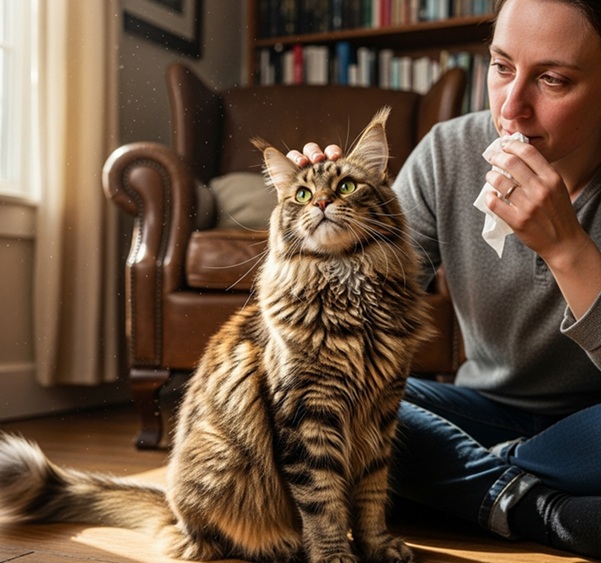

Maine Coon cats are admired for their kind temperament, impressive size, and beautiful appearance. Because of these fluffy giants’ big appearance and playful personality, many people want to keep them as pets. But if you have cat allergies, you should know are Maine Coon cats hypoallergenic?
Simply said, Maine Coons are not free from allergens and therefore not hypoallergenic. However, the relationship between Maine Coons and allergies is more nuanced than a simple yes or no. Understanding how cat allergies work and what makes some cats more tolerable for allergy sufferers can help you make an informed decision about purchasing a Maine Coon kitten or cat for your home.
Understanding Cat Allergies and the Fel d 1 Protein
Before getting into determining the Maine Coon’s speculated hypoallergenic status, one must understand what really attracts human allergic triggers. A common misconception is that people refuse to adopt these cats due to their long hair. Fel d 1, however, is the guilty protein.
Cats produce this protein through their sebaceous glands, saliva, and urine. When cats groom themselves during the day-a lot really-this protein gets spread onto their fur. As the saliva dries and becomes airborne, it can react with sensitive people on an accidental basis.
Every cat produces the Fel d 1 protein, but the amount varies significantly between individual cats and across different breeds. Some cats just tend to produce lower amounts of this allergen, which can make their presence acceptable to persons with mild to moderate allergies. It’s crucial to remember that no cat breed is 100% hypoallergenic.
Maine Coons and Allergy Production
Maine Coons, sadly, do not make it into the list of Fel d 1-lowering breeds. To the contrary, having long and dense coats may very well increase allergic reactions. Here’s how:
- Extensive Grooming: Maine Coons take pride in their grooming and will spend great time cleaning their coats. During grooming, saliva transfers Fel d 1 protein onto their coat.
- Large Surface Area: Being one of the largest cat breeds, Maine Coons naturally have more fur and skin surface area where allergens can accumulate to be carried throughout your home.
- Seasonal Shedding: They shed more or less all year, with peak shedding in spring and fall. Allergen dispersal may be at its highest during these months as loose fur acts as a carrier of dried proteins throughout your living environment.
- Dense Undercoat: Their double coat tends to hold on to allergens very near to the skin, and when they get the brushing and grooming, all of these particles are suddenly let loose into the air.
Managing Allergies with Maine Coons
If you want to share your dwelling with a Maine Coon in spite of a quirk of allergy, here are some options that may minimize your exposure to allergens:
- Grooming on a Daily Basis: Brush the Maine Coon every day to shed all loose fur and minimize lint-and-hair-allergen buildup in the air in the house. You may as well entrust the grooming duties to a family member who has no allergic tendencies.
- Frequent Bathing: Although cats don’t really have to be bathed, approximate once-a-week bathing will greatly help in suppressing the amounts of Fel d 1 that gather onto the fur of your cat. It’s best to introduce a bathing routine gradually while your Maine Coon is a kitten, using a gentle, cat-specific shampoo.
- Air Purification: Buy a high-end HEPA air purifier capable of trapping airborne allergens. It should be positioned inside the rooms you and your cat spend most of the time in.
- Allergen-Free Zones: Keep your bedroom and other important spaces off-limits to your Maine Coon. This gives you allergen-free areas where you can retreat when symptoms flare up. You can also create a specific napping area for your Maine coon that will be filled with comfortable cat bedding and blankets.
- Clean Up Often: Always vacuum using a HEPA filter, and wash your bed linen and curtains at least once a week before you can dust the surface areas.
- Consider Allergy Treatments: Consult with an allergist about immunotherapy, antihistamines, or other treatments that might help you better tolerate cat allergens.
Making the Right Choice for Your Family
In general, Maine Coons are not hypoallergenic; however, there have been a number of persons with allergies that have managed to live with them. How severe are your allergies, how committed are you to managing the condition, and how sensitive you are individually must be taken into consideration if this is going to be possible for you.
Really highly allergic persons will want to look into the truly low-allergen cat breeds like Russian Blue, Balinese, or Siberian. A Maine Coon can still be an option if you are mildly allergic or moderately allergic, and you are willing to live with strict allergen control methods.
Whatever you decide, make sure to spend time around actual Maine Coons to get a feel for your personal reaction. Visit breeders, volunteer at local shelters, or hang out with Maine Coon-owning friends. This sort of exposure will really let you know whether it is possible for you to live in harmony with these gentle giants.
For allergy sufferers, living with a Maine Coon can be challenging, yet their affectionate and family-friendly personality often makes them irresistible to those willing to manage the drawbacks. With a little management and real expectations, some allergy sufferers are able to make it in the same house as these gorgeous cats. If you are considering having one as a pet, you can find a reputable breeder with Maine Coon cats for sale.
Also read: Exploring the Joy of a Kitten for Sale

