

Ceramic and plastic pet water fountains can both make a useful drinking station. The better choice depends on what you can lift, how the parts come apart and whether the surface stays in good condition. Material matters, but it does not decide the power system, capacity or cleaning access.
Quick answer: Choose ceramic or plastic by the condition and accessibility of the exact product, not a blanket material ranking. W03 and W03L are both 3L ceramic models with different power systems; W600 Plus is a larger 6L plastic plug-in option. Compare handling and cleaning alongside material.
On this page
- Material comparison
- WOPET examples
- Inspect surfaces
- Handling scenarios
- Common questions
A useful comparison separates those decisions. A cordless ceramic fountain and a wired plastic one differ in more than material, so a preference for one should not be mistaken for proof that every fountain made from that material is better.
Ceramic versus plastic: the practical differences
| Question | Ceramic | Plastic |
|---|---|---|
| Handling | Can feel substantial; check the actual model weight. | Often easier to handle, but compare full-tank weight. |
| Damage checks | Inspect for cracks, chips and damaged glaze. | Inspect for deep scratches, cracks and surface wear. |
| Cleaning | Follow glaze and part-specific care instructions. | Follow the exact temperature and cleaning instructions. |
| Power | May be wired or rechargeable. | May be wired or rechargeable. |
| Best deciding detail | Can you lift and wash it comfortably? | Can you reach every wetted area and maintain the surface? |
When ceramic makes sense
Ceramic is worth considering when you like a substantial bowl and can handle it safely at the sink. A smooth, intact water-contact surface is useful only if the underside, outlet and filter housing are also accessible for cleaning.
Lift a wet ceramic component with both hands and avoid knocking it against the tap or sink. Inspect it while washing. Replace a damaged water-contact component rather than trying to hide a chip or crack with an improvised repair.
Do not assume “ceramic” means dishwasher-safe or free of plastic parts. A ceramic bowl can still contain a plastic filter holder, pump components or a dry electrical base. Each part needs the care specified for that model.
When plastic is more practical
Plastic may suit a larger reservoir or a household where easy lifting matters. The shape and thickness of the actual product matter more than the generic label. A large tank full of water is still heavy even if the empty shell is light.
Use the maker’s permitted cleaning tools and check for wear. A BPA-free description identifies one material property; it does not mean a surface cannot scratch, collect residue or need replacement. Avoid treating any material claim as a reason to skip washing.
Three WOPET models show why power and material are separate choicesW03: cordless ceramic, 3L
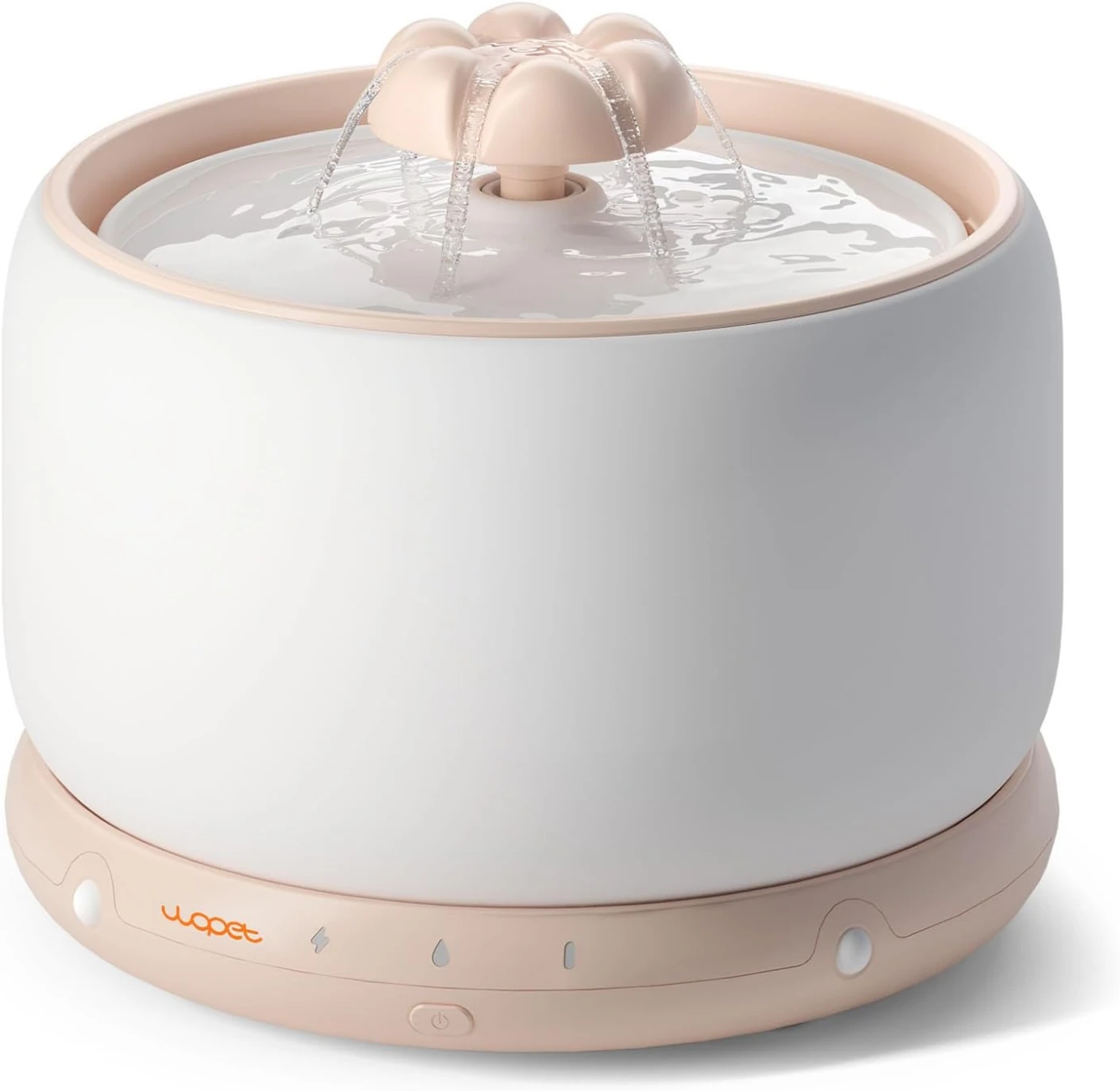
WOPET W03 · 3L · Rechargeable / cordless
Choose the W03 Ceramic Cat Water Fountain for comparison when you want a ceramic body and a rechargeable base. Its 3L capacity suits a smaller station; the cordless arrangement gives more location choices. Keep the base care separate from washing the bowl.
W03L: wired ceramic, also 3L
WOPET W03L · 3L · Plug-in
The W03L Ceramic Cat Water Fountain holds the same 3L nominal capacity but is plug-in. Comparing these two ceramic models isolates the power decision more clearly than comparing a 3L ceramic fountain with a much larger plastic one. W03L is not a 6L model.
W600 Plus: a larger plastic plug-in station
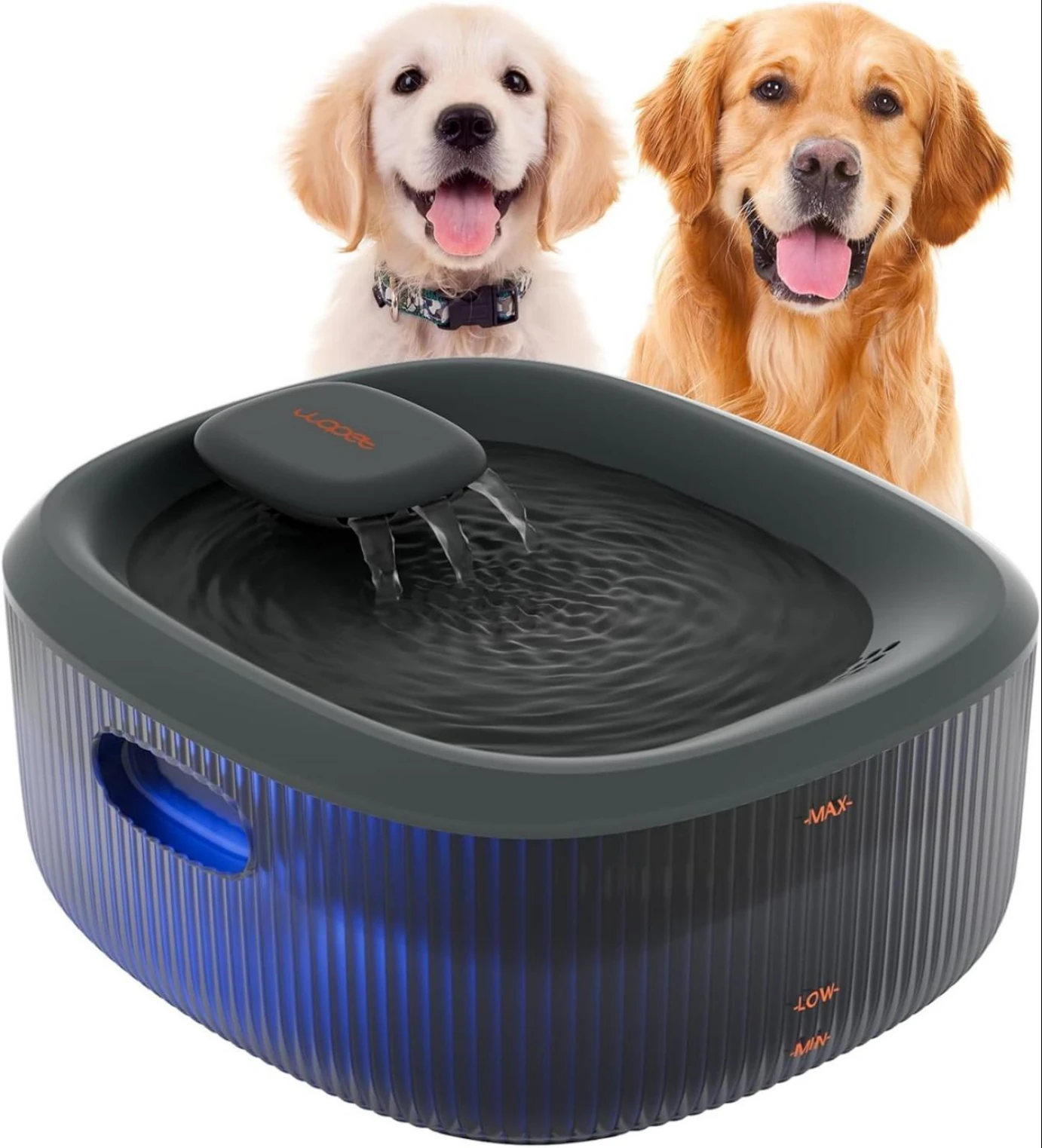
WOPET W600 Plus · 6L · Plug-in
The W600 Plus BPA-FREE Dog Water Fountain uses an ABS plastic body and holds 6L. It is a useful comparison for dogs or a shared cat station when capacity and a fixed outlet suit the home. Its different size means any handling advantage should be judged full as well as empty.
Use the sink test before deciding
Imagine your normal cleaning day. Where will the full tank drain? Can you lift the bowl without dropping it? Is the brush small enough for the outlet? Can you set the dry electrical parts somewhere that will not get splashed?
A material that seems ideal in a product photo can be frustrating if your sink is small or the parts are difficult to grip. Read the manual diagrams and compare the actual assembly rather than assuming all ceramic or plastic fountains open the same way.
The AVMA recommends frequent washing of pet water bowls. For a fountain, wash accessible wetted surfaces as directed and clean the pump and outlet on the model’s schedule. Filters cannot compensate for residue left on the tray.
Choose the complete fountain
Choose ceramic when the actual bowl, handling and power arrangement work for you. Choose plastic when the particular design provides the capacity and care access your household needs. If either surface is damaged or difficult to maintain, the theoretical advantage of its material matters less.
For cats with recurring skin irritation, discuss the symptoms with a veterinarian rather than assuming a material change will diagnose or cure the problem. A fountain purchase should be based on fit and care, not a blanket health promise.
Separate four decisions before comparing prices
Write down the material, capacity, power system and cleaning access as separate items. This avoids blaming a material for a difference caused by size or design. A heavy 6L assembly and a compact 3L bowl impose different lifting jobs even before you consider what their bodies are made from.
The W03 and W03L are a useful starting pair because both are 3L ceramic fountains. Choosing between them is primarily a location and power decision: cordless rechargeable W03 or wired W03L. The ceramic label alone cannot answer whether you prefer a battery routine or a fixed outlet.
Adding W600 Plus changes another variable: its 6L reservoir. It may fit a dog or shared station better, but that does not establish that plastic is universally preferable for those pets. It shows why the complete drinking area, usable capacity and handling job need to be compared.
Inspect the surfaces you will actually wash
Look beyond the outside finish. The underside of a tray, the edge around an outlet and the filter holder also contact water. A smooth visible bowl does not compensate for a narrow passage you cannot reach with the permitted cleaning tool. Use manual diagrams to identify serviceable areas before buying.
For ceramic, check the rim, underside and fittings for cracks or chips during normal washing. For plastic, look for cracks, deep scratches or changes that make the surface difficult to clean. If a water-contact part is damaged, ask for the correct replacement rather than sealing it with household glue.
Do not infer chemical resistance from the broad material name. A cleaning liquid or temperature that seems suitable for one component may harm a seal, coating or neighbouring plastic part. Follow the exact manual; a material comparison is not permission to use a different disinfectant, dishwasher cycle or abrasive tool.
Two everyday handling examples
A small kitchen sink
Measure the opening and the space below the tap. Imagine lifting a wet bowl with both hands and setting it down without touching the spout against the metal sink. A smaller reservoir may be easier to care for even if it needs more frequent refills. Keep a dry surface nearby for electrical parts.
A large shared station
Think through how the water will be emptied before moving the device. A plastic shell may be easier to grip when empty, but several litres of water still add weight. Check whether the handle and removal sequence work for the person who will do most of the cleaning.
Claims that deserve a closer look
| Claim | A more useful question |
|---|---|
| This material is always more hygienic. | Can this exact design be cleaned, rinsed and inspected consistently? |
| A BPA-free body needs little care. | What are the washing instructions and signs of wear? |
| Ceramic means every component is ceramic. | What materials are used in the holder, seals and pump parts? |
| A heavy bowl cannot move. | Is the assembled station stable in its real location? |
These questions keep the discussion grounded in maintainable surfaces and household fit. They also prevent a marketing label from becoming an unsupported promise about every pet or every unit. Good handling and regular care remain necessary whichever body material you choose.
Common questions
Can I put a ceramic fountain in the dishwasher?
Only if the instructions for the exact component allow it. A ceramic body does not make a pump, filter holder, battery base or seal dishwasher-safe. Check the separate care instructions before washing any part.
Does plastic automatically cause skin problems?
A material label does not diagnose an individual pet’s irritation. Keep the drinking surface clean, inspect for damage and discuss persistent symptoms with a veterinarian. Choose a maintainable design without treating a material change as a guaranteed cure.
Should material or capacity come first?
Begin with comfortable drinking access and a size you can maintain. Then compare materials within that useful size range. If a preferred material leads you to a tank that is awkward to wash or too small for the station’s use, reconsider the complete design.
Ceramic vs. Plastic Pet Water Fountains: Which Material Is Better?

