
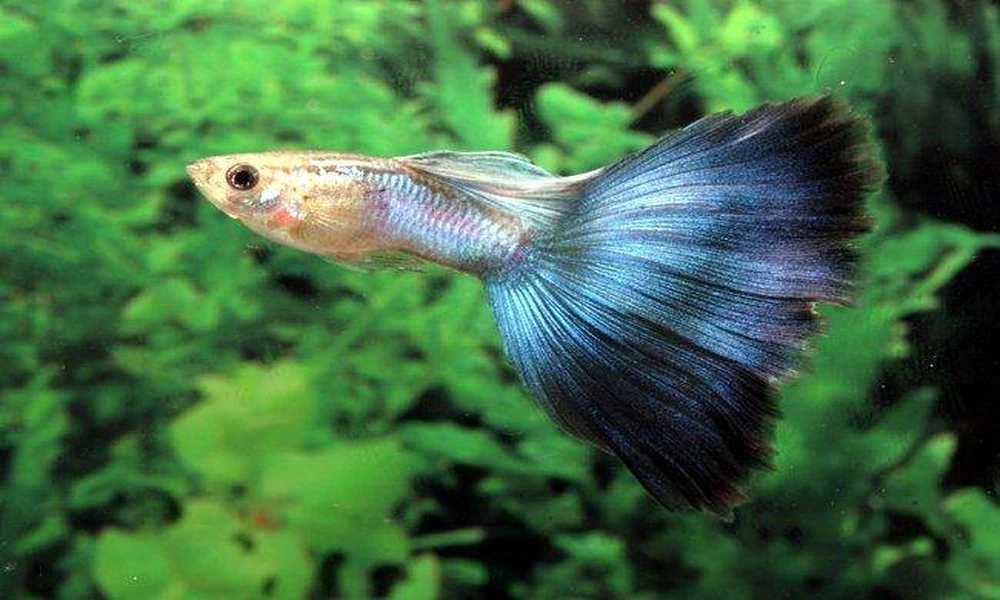

It’s the male of the species that gives guppies their reputation for spectacular colour, and understanding why makes a real difference to how you set up and stock a tank built around them.
Why Males Look So Different From Females
Decades of selective breeding have focused almost entirely on enhancing male display traits, since males use colour and fin size to attract mates in both wild and captive populations. Females retain a plainer, more practical body shape suited to carrying developing fry, which is why the difference between the sexes becomes so obvious once fish reach maturity.
Setting Up a Tank Around Male Guppies
A tank of at least 40 litres, gentle filtration, a stable heater between 22 and 28 degrees Celsius, and dense planting all suit a male-focused group well. Males housed together without females generally coexist peacefully, provided there’s enough space and cover to reduce occasional territorial squabbling.
Diet and Feeding
A varied diet of high-quality flake or micro-pellet food, supplemented with occasional live or frozen brine shrimp or daphnia, supports the vivid colour males are known for. Feeding small amounts two or three times daily suits their small stomachs far better than one large feed.
When browsing guppies specifically for a male-only display tank, take time to compare fin type and colour intensity across several individuals rather than choosing the first attractive fish you see.
Understanding Fin and Colour Varieties
Delta tail, veiltail, lyretail, and swordtail are among the most recognisable fin shapes, each carrying slightly different care considerations. Longer-finned varieties are more prone to damage and benefit from smoother décor and calmer tankmates than the hardier, shorter-finned strains.
Choosing Healthy Male Stock
Specialist retailers stocking guppy fish male groups tend to maintain better water quality and more accurate stock information than generic outlets carrying many unrelated species, which generally shows in the condition of the fish on offer.
Common Health Considerations
Fin rot, ich, and swim bladder issues linked to overfeeding are the most frequently reported problems, nearly all preventable with stable water quality and a sensible feeding routine. Long fins in particular are worth checking regularly for early signs of fraying or discolouration.
Water Chemistry and Cycling in More Detail
Beyond temperature, pH and hardness play a meaningful role in the long-term wellbeing of male guppy fish. A pH between 7.0 and 8.0 and moderately hard water suits most captive-bred lines well, since guppies originate from waters with a naturally higher mineral content than many other popular tropical species. A reliable liquid test kit, rather than paper strips alone, is worth the investment, since ammonia and nitrite spikes are usually the real cause behind symptoms that get blamed on the fish itself.
Cycling a new tank before introducing any livestock remains the single most overlooked step among first-time keepers. A tank that hasn’t been allowed to establish a healthy population of beneficial bacteria will see ammonia and nitrite climb rapidly once fish are introduced, placing considerable strain on their gills and immune system even in a species as generally hardy as this one. Patience during the first two to four weeks of a new setup pays dividends for the following two to three years, which is roughly the typical lifespan when conditions are well maintained.
Long-Term Enrichment and Behaviour
Despite their small size, guppies are surprisingly active and inquisitive, spending much of the day investigating plants, décor, and the movement of tankmates. Providing occasional novelty, whether through rearranged décor or a new piece of driftwood, can noticeably increase activity in a tank that might otherwise settle into a fairly static routine. A well-planted tank with varied swimming levels tends to produce more visibly engaged, confident fish than a sparse, minimally decorated setup.
Understanding Lifespan and Ageing
A typical lifespan of two to three years is standard for well-kept male guppy fish, though some individuals in exceptionally stable conditions live somewhat longer. Ageing fish often show a gradual dulling of colour and reduced activity, which is a normal part of the life cycle rather than a sign of illness, though a sudden rather than gradual change is always worth investigating through a water test first.
Continuous breeding does place a cumulative toll on female guppies in particular, since a mature female can produce broods roughly every four to six weeks for most of her adult life if kept with males. Some keepers choose to house females separately from males for periods to give them a rest from constant breeding pressure, which can noticeably extend a female’s condition and lifespan compared with continuous, unmanaged breeding.
Handling and Acclimatisation
Minimising time spent in a transport bag matters more for male guppy fish than for many hardier species, since a small volume of water changes temperature and oxygen levels quickly. A short, direct journey home, followed by floating the sealed bag in the tank for around fifteen minutes before gradually mixing in tank water, gives the fish the best possible start rather than releasing them straight into unfamiliar conditions.
Individual personality varies noticeably even within the same colour strain, and it’s worth spending the first week or two simply observing rather than judging health against an idealised standard. Some fish settle and approach the glass within days, while others remain more cautious for a couple of weeks; both patterns are entirely normal.
Seasonal Considerations for UK Keepers
UK homes can see meaningful temperature swings between summer and winter, particularly in rooms without central heating running constantly. A reliable heater with an accurate thermostat largely removes this as a concern for male guppy fish, but it’s worth checking the tank a little more closely during cold snaps, since even a well-insulated room can drop enough overnight to stress fish if the heater is undersized for the tank volume.
Choosing equipment that lasts also pays off over time. Spending slightly more on a reputable filter and heater at the outset tends to save money in the long run, since cheaper units are more prone to failure and inaccurate temperature control, both of which have outsized consequences for a species this sensitive to sudden change.
Substrate and Décor Choices
Substrate for male guppy fish is largely a matter of preference, though fine sand or smooth, rounded gravel is generally safer than sharp-edged material, which can tear delicate fins during normal exploration of the tank floor. Dark substrates tend to make colour pop more vividly against the backdrop, which is why many keepers favour black or dark grey sand in display setups.
Décor should prioritise smooth surfaces and plenty of cover without creating so dense a layout that fish struggle to move freely. Driftwood, smooth stones, and silk or live plants all work well, while sharp plastic ornaments with rough seams are best avoided regardless of how attractive they look in the shop.
Handling and Transport
Minimising time spent in a bag or small transport container matters more for male guppy fish than for many hardier species, since temperature and oxygen levels in a small volume of water change quickly. A short, direct journey home, followed by a gradual acclimatisation period of floating the sealed bag in the tank for around fifteen minutes before slowly introducing tank water, gives the best possible start rather than releasing fish directly into unfamiliar conditions.
Recognising individual personality is one of the more surprising aspects of keeping this species well. Some individuals are bold and inquisitive from the outset, approaching the glass readily, while others take considerably longer to settle and remain more reserved even once fully acclimatised. Neither temperament is a sign of poor health; it’s simply worth getting to know a group’s normal baseline behaviour so genuine changes are easier to spot later.
A Note on Cost Versus Value
It’s worth remembering that male guppy fish are usually the smallest ongoing cost in the entire setup once the initial equipment is in place. Food, water conditioner, and the occasional replacement filter sponge amount to very little over a typical two to three year lifespan, which makes the relatively modest upfront investment in a properly sized tank and reliable heater feel like considerably better value in hindsight than it might seem at the point of purchase.
Building a simple, repeatable maintenance routine early on removes most of the guesswork from long-term care. A weekly check of the heater, a quick visual inspection of the fish, and a partial water change take only a few minutes but consistently prevent the vast majority of problems that catch new keepers off guard further down the line.
Thinking About the Tank as a Long-Term Project
A tank built around male guppy fish tends to evolve considerably over its first year, as plants establish, algae patterns settle, and the keeper’s own routine becomes second nature. Treating the first few months as a settling-in period, rather than expecting a finished, static display immediately, leads to a far less stressful and more successful start for both fish and keeper.
Many keepers find that the small adjustments made in response to what a tank actually needs, rather than following a rigid plan set in advance, produce the best long-term results. Flexibility, paired with the core basics of stable water and consistent feeding, tends to matter more than any single piece of specialist advice.
Getting the Most Out of Observation Time
Spending even a few unhurried minutes watching male guppy fish each day, beyond the time spent on feeding and maintenance, tends to reveal far more about their wellbeing than a quick glance in passing ever could. Subtle shifts in swimming pattern, social interaction, or interest in surroundings often show up well before more obvious physical symptoms would.
Over time, this kind of regular, relaxed observation becomes one of the more genuinely enjoyable parts of the hobby for many keepers, rather than simply a diagnostic tool, and it’s part of why so many people who start with a single small tank end up expanding into a much bigger long-term interest in fishkeeping.
With the right setup and a little attention to sourcing, a male-focused guppy tank offers some of the most visually striking, low-maintenance results available to UK freshwater keepers, combining constant colour and movement without the added complexity of managing an ongoing breeding population.

