
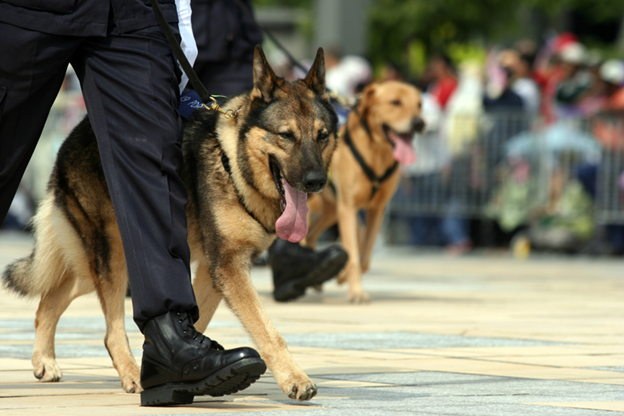

K9 security is all about using trained dogs to support safety and protection tasks in different environments. A K-9 guard dog, together with a trained handler, plays an important role in preventing crime, detecting threats, and keeping people and property safe. These dogs are carefully trained to handle real-world security situations, making them a powerful addition to any security plan and now trained german shepherd dogs for sale allow anyone access to having top tier security around the clock.
What makes K9 security so effective is the dog’s natural abilities. Dogs have an extremely strong sense of smell, fast reaction times, and sharp awareness of their surroundings. When these natural skills are combined with professional training, K9 units can spot dangers that humans or machines may miss.
You’ll commonly see K9 security teams working in airports, private properties, corporate offices, warehouses, construction sites, and large public events. In these places, K9 units help screen luggage and people, patrol wide areas, detect illegal substances, and identify possible threats before problems happen.
Why K9 Security Is So Effective
K9 units add an extra layer of protection that traditional security measures cannot always provide. Their presence alone can discourage criminal activity, as many people think twice when they see a trained security dog on-site.
Dogs are also excellent at finding hidden threats. They can detect explosives, drugs, or intruders quickly and accurately, even in large or crowded spaces. Unlike machines, dogs can adapt to different situations and react in real time.
Another major strength of K9 security is flexibility. A single K9 unit can patrol wide areas, support crowd control, assist during emergencies, and work alongside guards and surveillance systems.
Key Benefits of K9 Security Services
One of the biggest benefits of K9 security is deterrence. A trained dog sends a clear signal that a site is well protected, which can stop crime before it starts.
Detection is another major advantage. Dogs can identify threats that may be hidden or difficult to spot, reducing the risk of missed dangers.
K9 units are also cost-effective over time. While training and care require an upfront investment, dogs can reduce long-term costs by lowering the need for extra staff or expensive equipment. A single dog can cover large areas efficiently, making security operations more streamlined.
K9 units also help prevent incidents before they happen. Whether it’s stopping a break-in, preventing theft, or protecting valuable property, early detection can save businesses from serious losses.
How to Add a K9 Unit to Your Security Strategy
Adding a K9 unit to your security plan requires careful thought and preparation. When done correctly, it can greatly improve safety and response times.
Assess Your Security Needs
Start by reviewing your current security challenges. Consider whether you need help guarding entrances, covering large outdoor areas, managing crowds, or preventing theft and illegal activity.
K9 units work best when they are placed where they can make the biggest impact, such as patrol routes, access points, or high-risk zones.
Choose Between Hiring a Company or Building Your Own Unit
You can either hire a licensed K9 security company or create your own in-house K9 team.
Hiring a professional company is faster and gives you immediate access to trained dogs and skilled handlers. This option is ideal for businesses that want reliable protection without managing training and certifications themselves.
Building your own unit gives you more control but requires more time, effort, and money. You will need trained dogs, certified handlers, and proper equipment. This option works best for larger organizations with long-term security needs.
How to Build Your Own K9 Unit
If you decide to build your own K9 team, choosing the right dogs is the first step. Security dogs should come from professional trainers or licensed breeders who specialize in working dogs. Breeds such as German Shepherds, Belgian Malinois, and Labrador Retrievers are commonly used because they are intelligent, focused, and reliable.
Just as important as the dog is the handler. Handlers must receive proper training to understand dog behavior, give clear commands, and maintain control in stressful situations. Ongoing training and certification help ensure safety and effectiveness.
Set Clear Rules and Procedures
Strong rules help keep K9 operations safe and consistent. Decide when and where dogs will be used, how they respond to emergencies, and how they work with guards, cameras, and alarms.
Clear procedures reduce confusion and ensure everyone understands the role of the K9 unit.
Take Proper Care of the Dogs
K9 dogs are working animals, and their health matters. Regular vet visits, proper nutrition, exercise, and ongoing training are essential.
A well-cared-for dog performs better, stays focused, and has a longer working life. Good care is not just ethical—it also protects your investment.
Best Practices for Managing a K9 Unit
Managing a K9 unit requires attention and planning. Working with local law enforcement can help improve training quality and provide valuable guidance.
Regular performance checks are also important. Review how the dogs and handlers are doing, identify areas for improvement, and adjust strategies when needed.
Staying informed about local laws and regulations is critical. K9 use is regulated, and failing to follow the rules can lead to legal problems.
Strong bonds between dogs and handlers are essential. Trust, consistency, and regular training help teams work smoothly and safely.
Common Challenges With K9 Security
One common challenge is cost. Purchasing, training, and caring for dogs requires ongoing spending, including vet care and equipment.
Finding skilled handlers can also be difficult. A K9 unit is only as strong as the handler managing the dog.
Public perception is another concern. Dogs must appear professional and controlled, not aggressive or intimidating. Proper training helps balance security with approachability.
Liability is also a factor. Well-trained dogs and proper insurance help reduce risks related to injuries or accidents.
How Do I Become a K9 Security Officer?
Start by becoming a licensed security officer. This usually includes training, background checks, and a security license. Gaining experience in security, law enforcement, or the military is helpful.
After that, complete K9 handling training. Many people choose to work for security companies that provide trained dogs instead of training their own.
What Dog Breeds Are Best for K9 Security?
German Shepherds and Belgian Malinois are popular for patrol and protection work. Labrador Retrievers are often used for detection tasks like finding explosives or drugs.
Are K9 Units Better Than Traditional Security?
K9 units are not meant to replace guards or technology. Instead, they work best when combined with cameras, alarms, and trained officers. Together, they create a stronger and more reliable security system.
Do K9 Units Need Special Insurance?
Yes. Insurance is usually required to cover liability, including injuries or bites. Some policies also include health coverage for the dogs.
How Belfry Makes K9 Security Easier to Manage
Managing K9 units can be complex, but Belfry helps simplify the process.
Belfry is an all-in-one security management platform that gives you better control over your security operations.
It helps track certifications and sends alerts when renewals are due, so compliance is never missed. Automated scheduling allows teams to be deployed efficiently without extra work. Handlers can submit reports through a mobile app, making documentation fast and paper-free.
With GPS tracking and geo-fencing, Belfry improves accountability by ensuring K9 units stay where they are assigned. Alerts notify you if a team leaves its designated area.
With Belfry, managing K9 security becomes more organized, efficient, and reliable.

